

EV ENGINEERING CERTIFICATION
Learn. Build. Specialize.
Hands-on Practice in EV Research Centres
A structured, instructor-led EV engineering program
for B.E./B.Tech students and engineering graduates.
Live Technical
Learning
Learn from EV Experts
Project Based
Engineering
Work on Real EV Problems
Technical
Specialization
Build Depth in Your Domain
Engineering
Portfolio
Build Work You Can Show
ENQUIRY FORM
ENQUIRY FORM

For
B.E./B.Tech Students
& Engineering Graduate

Branches
EEE l ECE l Mechanical
Automobile l Mechatronics

Learning Mode
Live-Instructor Led Sessions
(Offline / Hybrid)

Experience
Simulation Projects
Pratical Exposure

Pathway
Learn -> Build
-> Specialize

Outcome
Certificate +
Project Portfolio
Turn EV Theory Into Engineering Practice
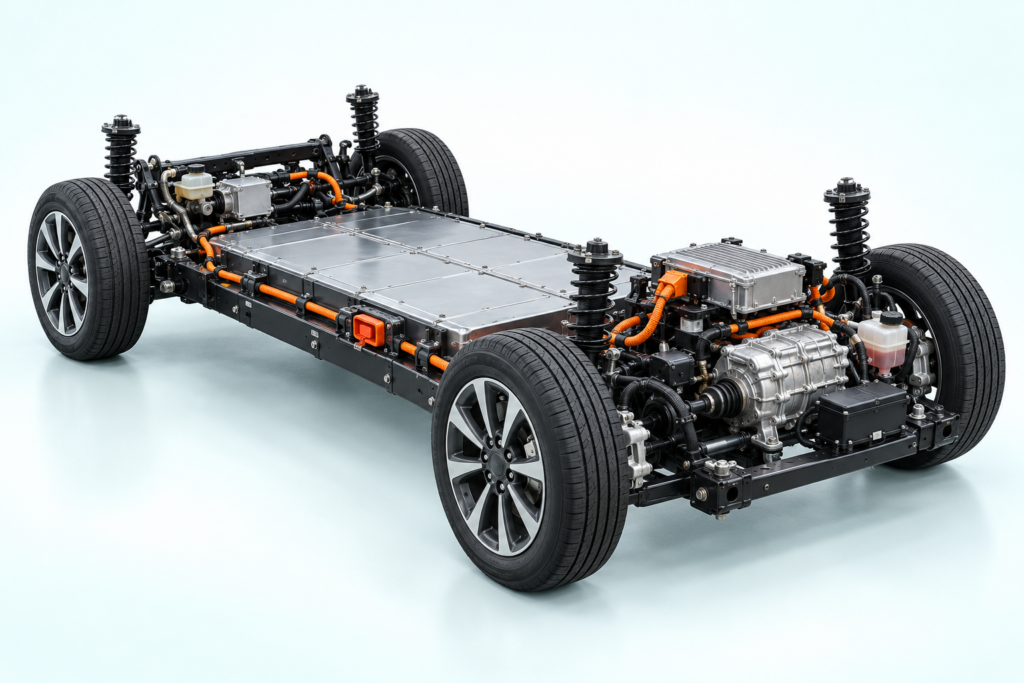
EV engineering brings together batteries, BMS, motors, power electronics, controls, charging and vehicle systems. This program adds a practical EV engineering layer to your existing engineering knowledge — helping you understand how EV subsystems work, apply concepts through simulation and engineering exercises, and work toward project-based learning.
Your EV Engineering Journey
A clear pathway from fundamentals to advanced skills.
LEARN
EV fundamentals
BUILD
Projects + Simulation
SPECIALIZE
Choose your technical domain
CHOOSE
EV Engineer / Product Builder
EV Engineering Certification Pathways
Start with the foundation. Build Engineering Capability. Go deeper into your choosen domain.
EV Engineering Foundation
Build the EV fundamentals
- ✔ EV architecture and energy flow
- ✔ Battery & BMS fundamentals
- ✔ Motors and drives
- ✔ Power electronics
- ✔ Charging systems
- ✔ Vehicle systems
- ✔ Introduction to EV modelling
- ✔ Foundation project
Applied EV Engineering
Move from concepts to engineering practice
- ✔ System modelling and simulation
- ✔ Component analysis and sizing
- ✔ Subsystem integration
- ✔ Testing & measurement
- ✔ Troubleshooting & validation
- ✔ Industry-focused case studies
- ✔ Capstone project
- ✔ Technical documentation
Basic EV Certification
Level : Foundation
- EV architecture and key components
- Battery and BMS fundamentals
- Power electronics basics
- Electric motors and drives
- Introduction to EV modelling
- Foundation-level mini project
Advanced EV Certification
Level : Advanced
- Advanced powertrain modelling
- Battery pack design and analysis
- Converter and motor control
- CAN and embedded integration
- Testing and validation methods
- Industry-focused capstone project
What You'll Learn
Key EV Engineering topics mapped to real world applications.
EV Architecture
Vehicle Architecture, key components and system design.
Battery and BMS
Battery fundamentals, configuration, SOC and BMS concepts.
Power Electronics
Converters, invertors and their applications in EVs.
Motors and Drives
Motor types, control strategies and drive systems.
EV Modelling and Simulation
System modeling and performance analysis using MATLAB/Simulink.
Charging and Vehicle Systems
Charging systems, controls and vehicle-level integration.
Testing and Validation
Measurement, testing methods, safety and performance .
Capstone Project
End-to-end design, integration and validation.
Choose Your EV Engineering Direction
A clear deeper skills in the area you want to explore.
EV
Design
Battery Systems
Power Electronics
Testing and Validation
Simulation and R & D
System Integration
Electrical and
Power Systems
Battery - Power Electronics Drives
Electronics and Embedded Systems
Controllers -Sensors
CAN - VCU
Instrumentation and Control Systems
Control - Measurement Diagnostics
Mechanical / Vehicle Engineering
Integration - Packaging Thermal Systems
Final Year Projects
Capstone - Research Technical Portfolio
Fresh Graduates
Technical Foundation
Projects - Specialization
Who Is This Course Suitable For
Designed for engineering students and early career professionals from :
Electrical and
Electronics (EEE)
Electronics and Communication (ECE)
Instrumentation and Electronics (EIE)
Mechanical / Mechatronics
Final Year
Students
Fresh
Graduates
Build Real EV Engineering Experience
Apply what you learn through simulations, engineering exercises and project-based work.
Battery and BMS study
Analyse Battery behaviour, SOC and BMS concepts.
EV Powertrain Model
Connect battery, converter, inverter, motor and vehicle load into a system model.
BLDC Motor Drive Simulation
Model and analyse motor-drive systems.
EV Capstone
Bring multiple subsystems together around a real engineering proble.
Practical Engineering Experience
Learn through guided projects, simulations and real engineering exercises.
Mentor Support and Guidance
Get technical guidance while working through engineering concepts and projects.
Portfolio Ready Project Work
Document projects and technical work that demonstrate what you've learned.
More than a Certificate
Finish with technical capability, project experience and work you can talk about.
Technical
Skills
Understand EV systems
and engineering
fundamentals.
Project
Experience
Apply concepts
through guided
engineering work.
Domain
Exposure
Explore multiple EV
domains and their real-world applications.
Engineering
Portfolio
Build Documented
work that showcases your learning.
Industry
Interaction
Learn through expert
guidance and real-world insights.
Chieftronics EV Certification
Receive a certificate on successful completion.
Frequently Asked Questions
What are the prerequisites for this program?
The program is designed for B.E./B.Tech students and engineering graduates from EEE, ECE, Mechanical, Automobile, Mechatronics and related branches. No prior EV industry experience is required.
Is this program suitable for my engineering branch?
Yes. The program is suitable for EEE, ECE, Mechanical, Automobile, Mechatronics and related engineering branches. You can choose an EV engineering direction based on your technical background and interests.
Is this program live Instructor-led ?
Yes. The program is live and instructor-led, with technical sessions, guided simulations, engineering exercises and project-based learning. It is not a recorded-video-only program.
Is it available online, offline or hybrid?
Program delivery depends on the selected batch. Offline and hybrid options may be available, with practical learning and guided project work across the formats.
Do I need MATLAB/Simulink experience?
No. Prior MATLAB/Simulink experience is not mandatory. The required tools and simulation concepts are introduced through guided, hands-on sessions.
What projects will i work on?
You will work on practical EV engineering problems such as battery and BMS analysis, motor-drive simulation, DC-DC converter modelling, EV powertrain modelling and a guided capstone project. Projects may vary by selected pathway.
How is project work assessed?
Your work is assessed through technical exercises, simulation activities, project execution and your ability to explain the engineering concepts behind your work.
Will i receive a certificate?
Yes. Participants who successfully complete the required program and assessment receive an EV Engineering Certification. Completion requirements may vary by program format.
What will I have in my portfolio after completion?
You will have documented project work, simulation exercises and technical outputs that you can use to demonstrate your EV engineering skills during internships, interviews and project opportunities.
How do I enroll in this program?
Click “Enquire Now” and submit your details. Our team will share the suitable program pathway, upcoming batch details, delivery mode, schedule and enrolment information.
Ready to Start Your EV Engineering Journey
Get program details, upcoming batches
and talk to our town.